Meet Ishmail: family, Freetown and finding his path in research
Ishmail talks to us about growing up in Freetown, family and education, finding his way into research, learning to speak up, and what life looks like outside work.
Ishmail was one of the early members of Laterite’s Sierra Leone team, joining shortly after the Freetown office opened in 2023. But to understand Ishmail, it helps to start well before Laterite: with afternoons spent in the National Library of Sierra Leone, a grandmother who insisted she did not have a favourite grandchild while cooking him separate meals, and a mother whose determination to give her children a good education shaped how he thinks about success.
He describes himself as naturally shy and happiest at home with his wife and three sons. Get him talking, though, and there is plenty he has strong opinions about: why Sierra Leonean families are sometimes “basically magicians” when it comes to making limited resources stretch, why cassava leaves are in a category of their own, and why the Harry Potter films did Ginny Weasley a serious disservice.
We sat down with Ishmail to talk about growing up in Freetown, family and education, finding his way into research, learning to speak up, and what life looks like outside work.
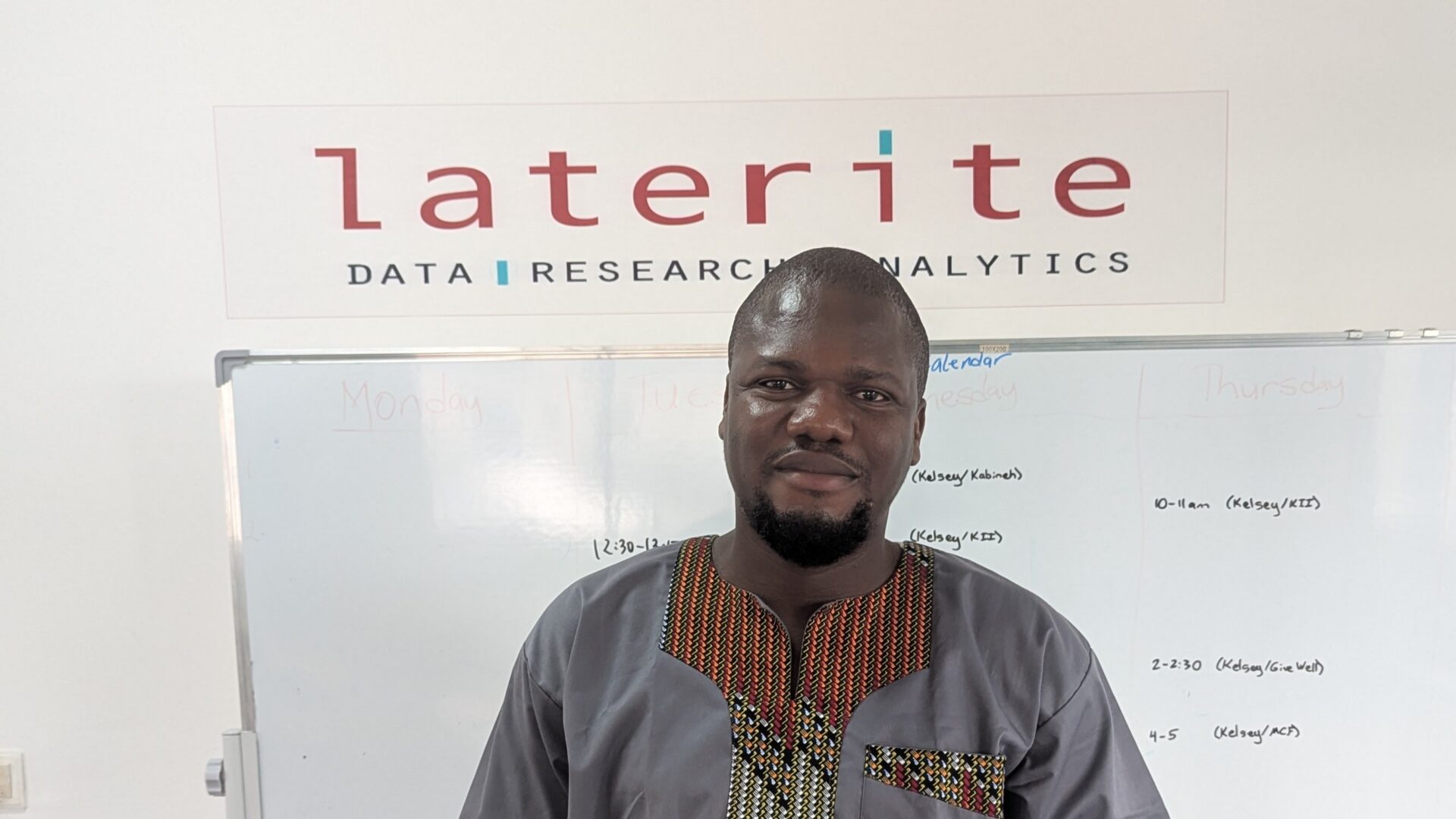
Ishmail on a Laterite Office Retreat
Growing up in Freetown
To start off, could you tell us a bit about where you grew up in Sierra Leone?
I was born in Kenema, but I grew up almost entirely in Freetown. In Sierra Leone, or at least in my family, there was a tradition where an expectant mother would go back to stay with her parents when she was about to give birth, mainly so she could have family support during the baby’s first few months. So my mother went back to stay with my grandmother in Kenema, had me there, and stayed for about three months before we returned to Freetown.
I didn’t grow up with my grandparents, but we visited them a lot during the holidays. Then towards the end of their lives, they came to live with us in Freetown for about five years, which was really nice. Growing up, I was very obviously my grandmother’s favourite, although she would never admit it. If you asked her, she loved all her grandchildren equally, but her actions made it pretty obvious.
I was a very picky eater as a child and really disliked groundnut soup because I never felt full afterwards. In my head it was basically, why am I eating this if I am still hungry afterwards? So whenever the family had groundnut soup, my grandmother would go to the market, buy potatoes or cassava leaves, and cook a separate meal just for me.
She did not do that for anybody else.
So whenever she said she loved us all equally, everyone was basically thinking: come on.
Sierra Leone – credit: Abdulai Sayni via unsplash
What about Freetown itself feels special to you?
Hmm. That is actually a difficult question. There are a lot of things that feel normal to me because I grew up here, so sometimes I am not sure if they are actually unique to Freetown or Sierra Leone. I have never travelled outside the country, so I always hesitate a bit before saying, “this is definitely something only we do.”
One thing I do think stands out is how friendly and accommodating people are, especially to travellers and foreigners. People genuinely go out of their way to help someone. But the thing that probably inspires me most is people’s ability to survive on how much they are making. You will see someone earning very little, but somehow their child is going to a private school. You ask them how they are paying the fees, buying the books and managing everything else and sometimes they will tell you, “I literally have no idea.”
People are basically magicians.
It is not that they are doing anything unusual. They just have a goal, and they put so much effort and sacrifice into making sure their children get a good education.
For me, that is what success looks like. You have a goal, you put in the effort and make the sacrifices, and eventually you watch your children achieve something you always hoped they would.
Family, community and what success looks like
Was that same emphasis on sacrifice and education part of your own family life?
Very much. I grew up mainly with my mum, and I think it was only when I got to college that I really started to appreciate how much effort she had put into making sure I got there.
There were also a lot of single mothers around her when I was growing up. They would support one another by sharing tips, resources and advice about schools, figuring out how to make things work. So I grew up seeing a lot of women doing whatever they could to get their children through school. That definitely shaped the way I think about family, education and sacrifice.
Another value that was really important in my family was humility. We did not have that much growing up. We were not the poorest people around either, but I saw quite early how some people treated others differently depending on how much money they had, and I really did not like that.
For us, it was about respecting everyone regardless of their station.
I have always believed that if you put good into the world, good will come back to you.
Even professionally, I think that has helped me quite a lot. If you respect people, listen to their opinions and try to understand where they are coming from, it makes it much easier for people to work with you.
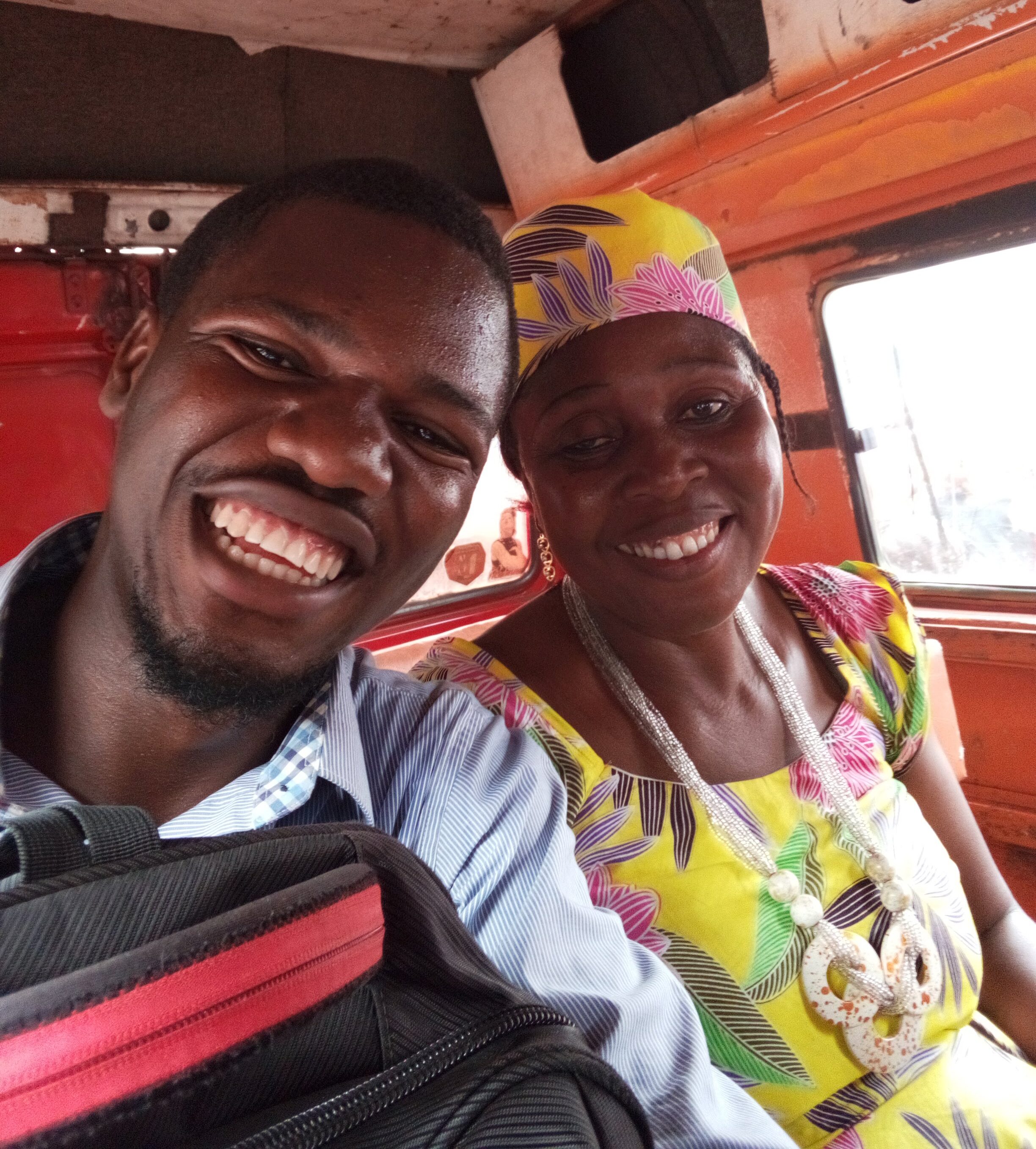
Ishmail and his mom, 2018
What was it like growing up with your sister?
It was just the two of us, my sister and me. We are much closer now than we were growing up. Back then, we had completely different friend groups and very different preferences, so we did not always see eye to eye.
We only had one television in the house, and between 8:00 and 9:00 in the evening was the competitive time slot because after 9:00 you were usually too tired to enjoy anything properly. Trying to decide what to watch was chaotic. It got so bad that eventually we had to assign specific days. She had her days and I had mine.
If it was not your day, you either sucked it up and watched whatever the other person wanted, or you went to read a book.
We obviously support each other much more now that we are adults.
A childhood surrounded by books
Your mother worked as a librarian. How did that shape your childhood?
Oh yes. Oh my God, yes. I was a big reader.
My mother worked for the National Library of Sierra Leone, and my primary school was literally a two-minute walk from where she worked. So after school, I would go over there and spend hours in the library surrounded by books.
You really had no choice but to read.
That is actually how I became a huge Harry Potter fan when I got into secondary school. The frustrating part was that the library usually received books a few years after they had officially been released. So I read most of the Harry Potter books quite early, but I could never find The Deathly Hallows.
I kept looking for it thinking, the movies are already out now, how do we still not have this book? I only finally read it about five or six years ago.
And as a fan of the books, how do you feel about the film adaptations?
There are definitely creative choices I did not care for.
Let’s start with Ginny. They really toned down her character. In the books, especially by book six, she has so much more personality, humour and sass. That just did not come across in the films.
I also didn’t like how they handled the relationship between Voldemort and Dumbledore. In the books, especially during the battle at the Ministry in book five, it is very clear why Voldemort is afraid of Dumbledore. Dumbledore wins that fight pretty convincingly.
Then in the movie, they somehow make it look like Voldemort is winning.
I remember watching it thinking: how?
So yes, I apparently have quite strong opinions about Harry Potter.
Shyness, school and early influences
Thinking back to your childhood, what is one of your earliest memories?
Probably my first day in primary school. I think I remember it because I was very shy as a child. I am still shy now, but it was significantly worse then.
It was probably the first time I had really been left somewhere on my own. I do not remember the whole day. I just remember the feeling of dread that my mum had left me in a classroom full of strangers and adults I did not know. I was basically waiting for her to come back.
I would still count myself as shy now.
If someone talks to me, I will gladly engage, but I am not the type of person who is going to walk up to someone randomly and start a conversation. I have got much better at it. It just still feels a little awkward.
Was there a teacher or mentor who had a big influence on you?
There was one teacher in primary school who really set the standard for me. He taught us through several of our final years of primary school and went above and beyond to make us want to learn. He would follow up with us, motivate us and even reward us out of his own pocket when we did well.
There was one challenge where I got the best English grades for two terms in a row.
No one could touch me.
My reward was free lunch for two weeks. So for two weeks I basically had double lunch every day. I felt on top of the world.
Then I moved into secondary school and it was quite a culture shock. Some teachers were much less hands-on, and in the first school I went to there were even situations where students were expected to give teachers extra money for good grades.
I remember thinking, how is everybody acting like this is normal? I did not know how to deal with that at all, so eventually I changed schools.
That experience made me appreciate my primary school teacher even more. He genuinely cared about whether we were learning and wanted us to do well.
Finding his way into research
How did your professional journey eventually bring you to Laterite?
Before Laterite, I worked mainly in field data collection. I started as an enumerator and moved fairly quickly into roles as a field supervisor and assistant field manager. For two or three years, I worked on a longitudinal study that happened every year.
That gave me a lot of experience with planning data collection, managing field teams and thinking about data quality. It also got me thinking much more about processes. You do the project this year, then you know you are going to do it again next year, so you start asking: what worked? What did not work? What can we improve next time?
That ended up aligning quite well with what I later started doing at Laterite.
Someone I knew had already taken the aptitude test and had not made it through. He told me, “Maybe you can have a go.” So I thought, yeah, let me try.
I took the test, passed, went through the interviews and joined in March 2023. Very last minute.
What does your work look like now?
My day-to-day changes completely depending on whether we have an active project or we are in a quieter period.
When a project is running, everything becomes very fast-paced. We are figuring out how many enumerators we need, who is available, where training will happen, how teams will be assigned, and how the data collection is progressing.
When we are between projects, I spend much more time reflecting on completed work, documenting what worked and what did not, and trying to make sure we are better prepared for the next project.
Because the Sierra Leone office is relatively small, I also end up doing quite a lot that is technically not my job. I have been here the longest now, so there are administrative processes where I sometimes realise I am the only person who still knows how something works.
We are trying to document all of that properly so it does not just live in one person’s head.
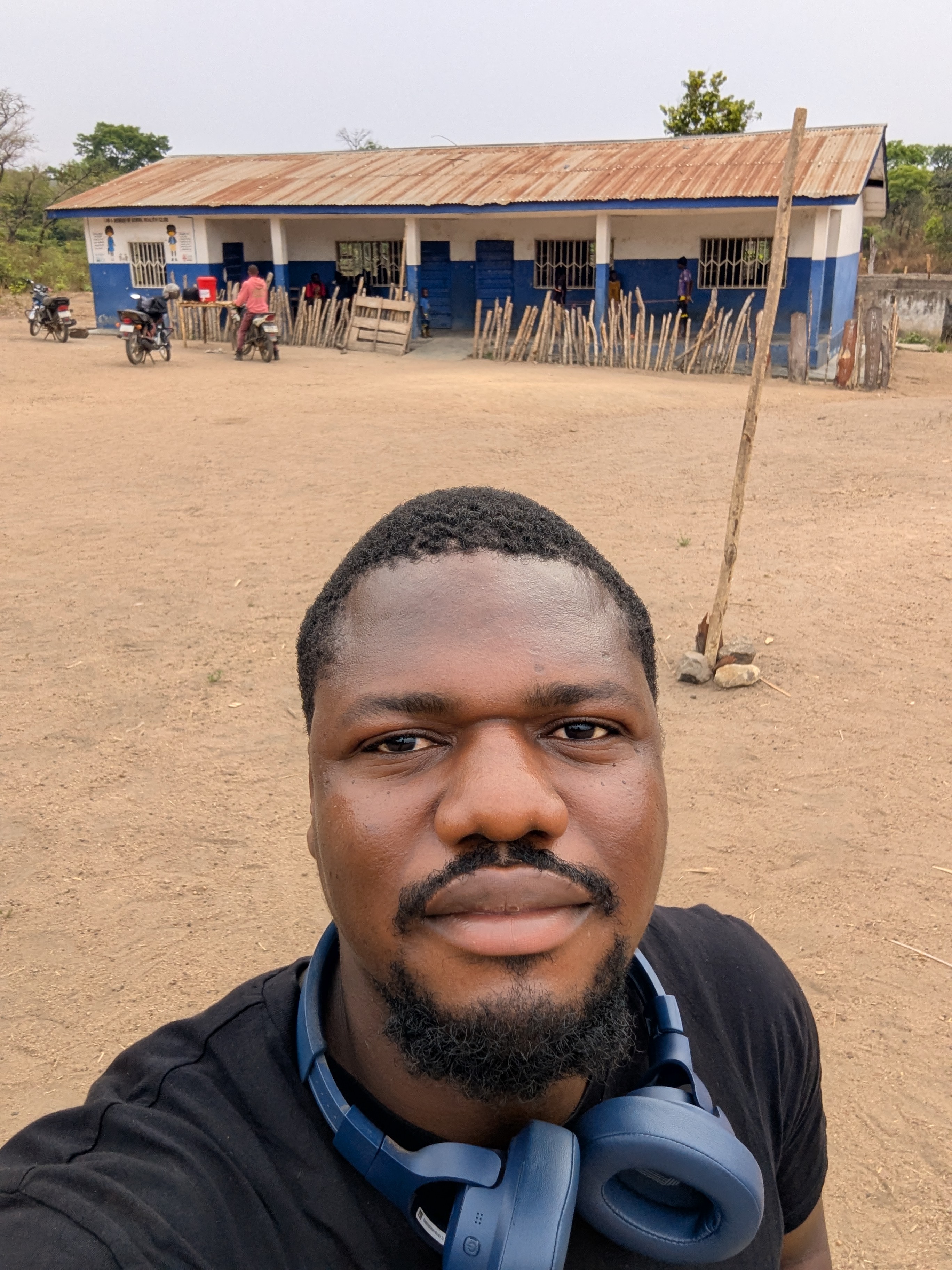
Ishmail conducting fieldwork in Falaba, Sierra Leone
Learning to speak up
What is the best piece of career advice you have received?
To show up and speak up a little bit more.
I actually got almost the same advice from two different people at different points in my career. Because I am naturally shy, I used to sit through a training session or meeting with an idea in my head and say nothing. Then afterwards I would go to whoever was leading it and say, “I was thinking maybe we could do this…”
One person eventually said to me: you need to say these things in the room. It is good that you are telling me afterwards, but sometimes by then it is too late to actually use the idea.
Then when I joined Laterite, my manager at the time, Bea, gave me similar advice. She encouraged me to put myself out there a little more and make my work visible.
It is still something I struggle with. I do not really care that much about being in the spotlight, and I am still not particularly comfortable with it. But I have got much better at speaking up when I think I have something useful to contribute.
What are you hoping to learn or improve next?
I am very interested in improving my technical skills, especially working with data and automation. There are tasks in research operations that are quite monotonous. You have to do them for every project, and there is not really a way around that.
But if you can create a better template or a system where some of that work gets done for you, it makes things much easier. So I am interested in improving my analytical skills and finding better ways to automate parts of my work, which then gives you more time to focus on the things that actually need your attention.
Life outside work
Outside work, what does a great weekend look like for you?
I am a complete homebody.
Outside work, I mostly just like staying indoors. I spend time with my wife and our three sons, play video games, watch things and cook together.
Although my favourite part of cooking is probably trying to steal pieces of meat before the food is actually ready.
I do not really understand why this is a problem. We are all eventually going to eat it anyway.
Apparently, though, you are meant to wait until everything has been properly cooked and served.
I have also recently got into anime, although I do not think my colleagues would find that particularly surprising. If you told them, “Ishmail likes staying indoors and watching things, guess what genre he has got into,” I think they would get to anime pretty quickly.
What should someone visiting Sierra Leone eat?
Cassava leaves.
But cassava leaves are almost too obvious. They are in their own category. They are really good when they are freshly cooked, but if you have leftovers the next morning, somehow they are even better. So if we take cassava leaves out of the competition, my other favourite is a leafy dish we simply call “green.”
What song have you had on repeat recently?
“Golden” from KPop Demon Hunters.
I was not a K-pop person at all. I had never listened to K-pop. Then I heard that song and I could not get enough of it. I still could not tell you the first thing about K-pop as a genre, but I love that song.
Is there one item you could not live without?
Honestly, no. There are things I really like. My phone is probably the main one. But even then, I could live without it.
Do not get me wrong, I like my stuff. If somebody took it away, I would suffer a little bit and I would definitely miss it. But I would be fine.
If you changed the question from things to people, then it is family. Most of what I do is because of them.
I cannot really imagine what life would look like without my family. I would have to find a completely new source of motivation.
Finally, what advice would you give to someone joining Laterite for the first time?
Get through the imposter syndrome as quickly as possible. Ideally, within your first two weeks.
I think almost everyone starts a new job wondering, am I really the right person for this? Did they actually mean to hire me?
I had exactly the same feeling when I joined Laterite. Looking back, though, I feel like that period was a bit of a waste of my time.
The fact that you are here already means you are qualified for the role. There is no one at Laterite waiting for you to prove that you somehow tricked your way in.
So find your place and start doing things. Everyone else is probably just excited to work with you.
We use cookies to optimize our website and our service.
Functional
Always active
The technical storage or access is strictly necessary for the legitimate purpose of enabling the use of a specific service explicitly requested by the subscriber or user, or for the sole purpose of carrying out the transmission of a communication over an electronic communications network.
Preferences
The technical storage or access is necessary for the legitimate purpose of storing preferences that are not requested by the subscriber or user.
Statistics
The technical storage or access that is used exclusively for statistical purposes.The technical storage or access that is used exclusively for anonymous statistical purposes. Without a subpoena, voluntary compliance on the part of your Internet Service Provider, or additional records from a third party, information stored or retrieved for this purpose alone cannot usually be used to identify you.
Marketing
The technical storage or access is required to create user profiles to send advertising, or to track the user on a website or across several websites for similar marketing purposes.