

Context
As mobile phone ownership and network coverage improve across Sub-Saharan Africa, researchers are increasingly turning to phone surveys in Sierra Leone and beyond as a cost-effective and rapid alternative for large-scale data collection. But are they always effective?
In Sierra Leone, researchers tested phone surveys during the 2014-2016 Ebola outbreak. This study highlighted several benefits of mobile phone surveys in Africa. It also showed the possibility of collecting real-time data quickly and safely in high-risk situations like epidemics. However, it also highlighted significant hurdles to implementing phone surveys in the country.
Phone ownership is often limited or shared, especially in rural areas, making it difficult to reach a specific individual and ensure privacy during interviews. Even with the right phone number, poor network coverage may require respondents to stand in specific areas to access signal. A lack of consistent electricity means phones are frequently switched off. People also change numbers frequently, making contact lists outdated within months (Learn more about the complexities of conducting surveys in Sierra Leone).
We faced these same challenges in the Outcomes Fund Study, which the What Works Hub for Global Education (WWHGE) supported. Funded by the Education Outcomes Found, this study assessed students’ learning outcomes as part of the Sierra Leone Education Innovation Challenge (SLEIC). SLEIC is a nationwide initiative led by the Ministry of Basic and Senior Secondary Education to improve foundational literacy and numeracy skills in 650 primary schools across 16 districts of Sierra Leone. A key component of the study was to interview 6,500 caregivers alongside head teachers, teachers, students, and classroom and school infrastructure observations. While phone surveys seemed like a logical choice for the scale, the known challenges created uncertainty around coverage and nonresponse biases. We needed a hybrid, evidence-informed data collection strategy to manage these risks effectively.
Process
Step 1: Collect replacement phone numbers to increase survey success
First, we prepared our sampling protocol in alignment with the reality on the ground. In October 2024, we conducted a smaller feasibility study with 330 caregivers. We found that while about 60-70% of attempted calls didn’t connect, of the numbers we did reach, 95% reached the intended caregivers. This showed the main issue wasn’t inaccurate phone rosters but poor connectivity and phones being switched off.
Based on this, we assumed a 35% contact rate for the main study. To reach our target of 10 caregiver interviews per school, we needed about 30 phone numbers. We collected two replacement contacts for every sampled caregiver. Enumerators called a replacement caregiver if the main contact did not answer after a week. This step was critical in meeting our survey targets in Sierra Leone.

The team of enumerators during the pilot study in Freetown
Step 2: Use a hybrid data collection approach in low-connectivity areas
We also adopted a hybrid approach to large scale survey research in Sierra Leone. Our feasibility study confirmed that a “phone-only” strategy wouldn’t work everywhere. Using GIS mapping, we identified low-connectivity areas that required in-person visits.
For the main study, we kept our fieldwork flexible and data-driven. Each week, we analyzed call outcomes by school, chiefdom, and district. Based on this, our research and operations teams would triage schools into three categories for the upcoming week: “Must Visit” (low connectivity), “Must Call” (high connectivity), or “Mixed” (hybrid approach). We adjusted targets weekly in collaboration with the WWHGE team.
This system helped us prioritize resources and send enumerators where they were most needed—a key lesson for mobile data collection in Sub-Saharan Africa.
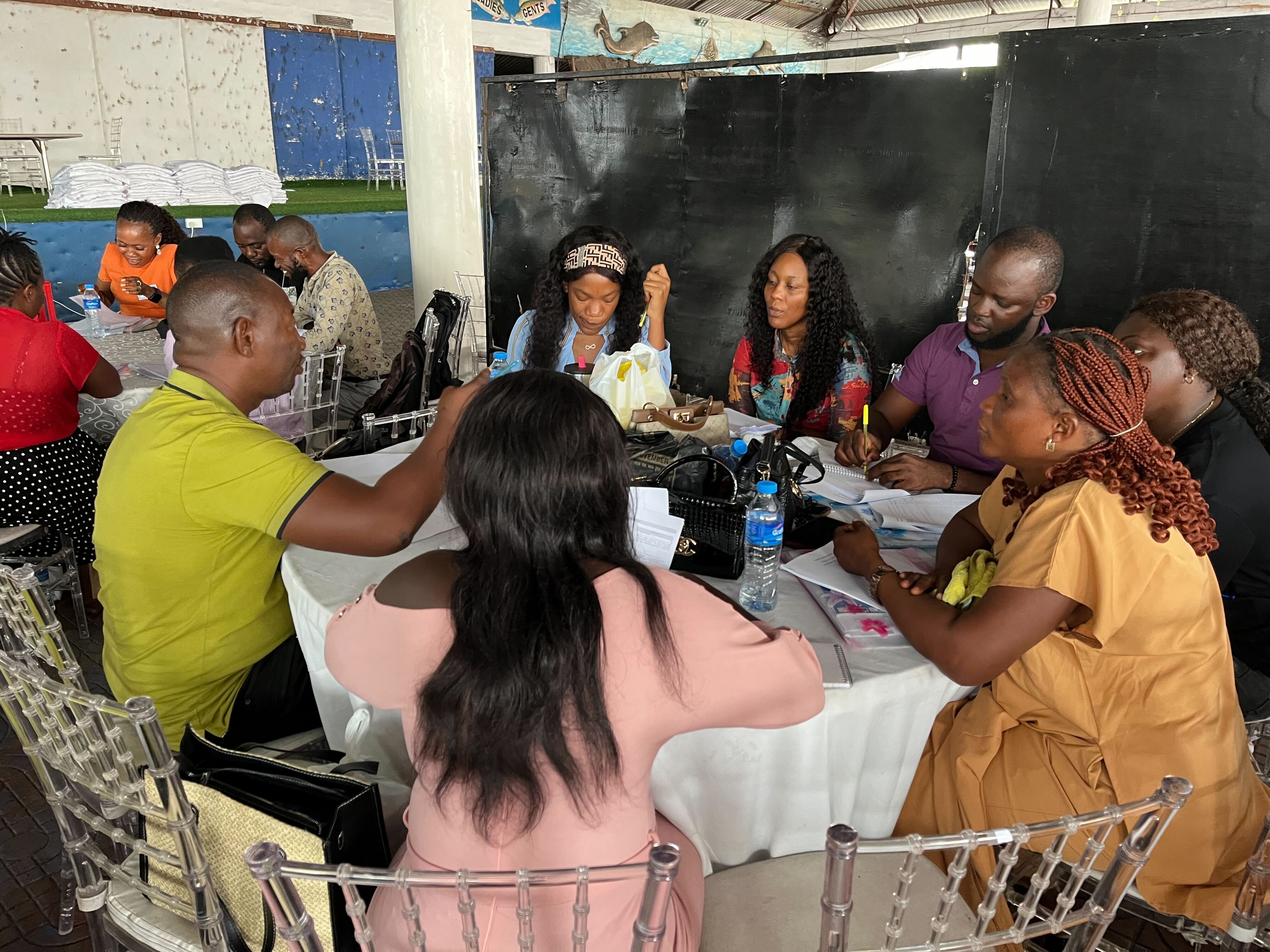
Role play and discussion session during the enumerator training
Step 3: Track enumerator performance to ensure survey quality
Third, we managed our field team with data. A remote phone survey team requires a robust system for quality control and individual accountability. Our dashboards measured the daily performance of each enumerator, tracking the number of call attempts, completed interviews, and schools covered.
This transparency kept the team engaged and accountable. The research team used this data to assign specific schools to enumerators and ensured a balanced workload. This intensive management showed us a key lesson: for remote survey work in Sub-Saharan Africa, a smaller team of high-performing enumerators is far more effective than a larger, less engaged one.

Members of Laterite and WWH during the enumerator training
Lessons for conducting large-scale phone surveys in Sierra Leone
Our data-driven, hybrid strategy led to achieving the required coverage of four or more caregiver surveys in each of the 650 schools (a total of 5,071 interviews) despite the contextual challenges.
This hybrid approach was vital to collecting data representative of diverse realities in Sierra Leone. Relying on phone surveys alone would have systematically excluded caregivers in remote, low-connectivity areas. While this survey method was not free from potential bias, our strategy ensured we captured voices from across the entire country.
This study exemplifies that with careful planning, robust data systems, and an agile field operation, it’s possible to conduct high-quality phone survey research at scale, even in challenging contexts. As phone infrastructure continues to improve in Sierra Leone, the lessons from this approach provide a valuable blueprint for future research.
This blog was written by Ayumi Uchiyama, Research Analyst in Laterite Sierra Leone.