
Malawi training: in focus
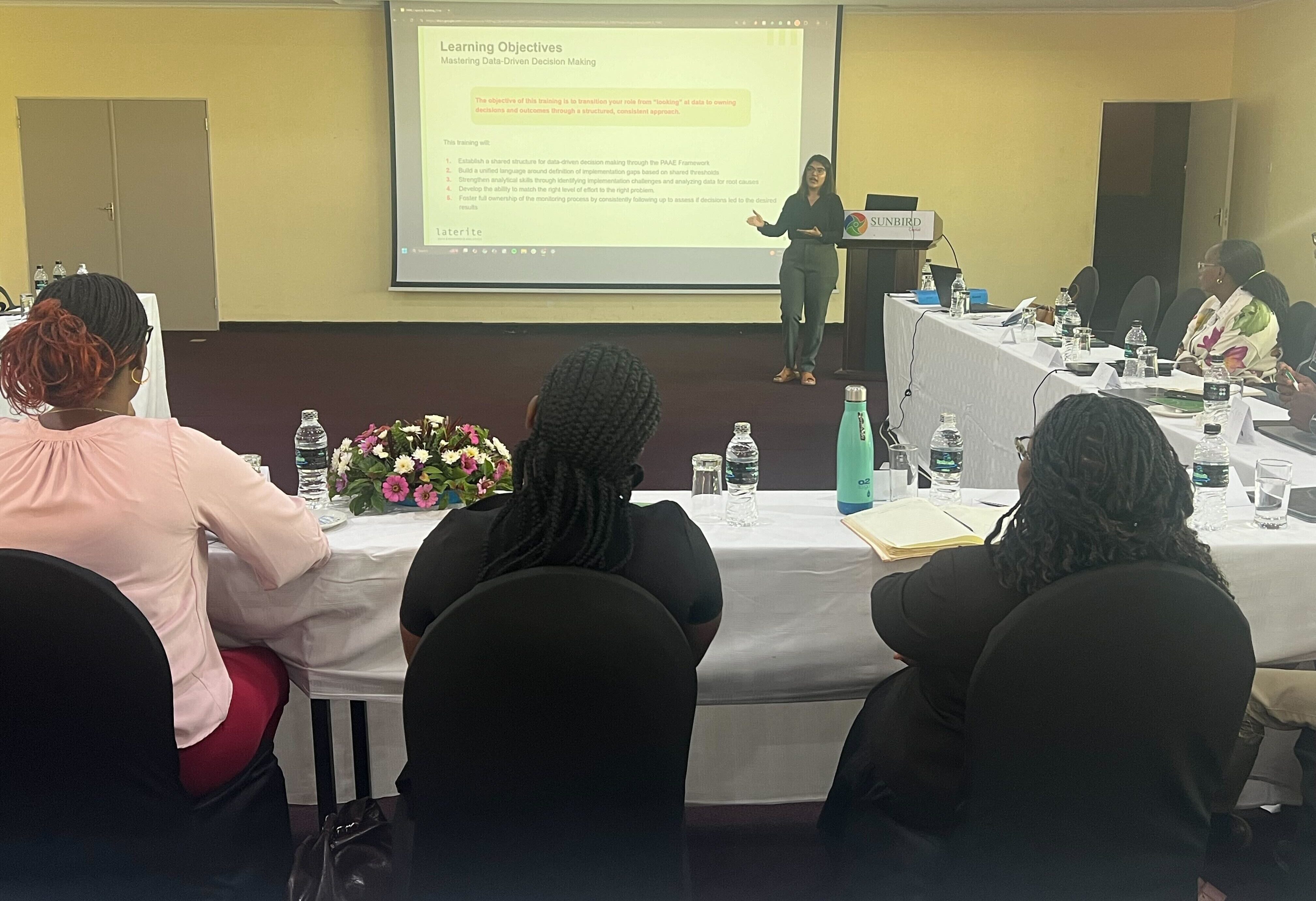
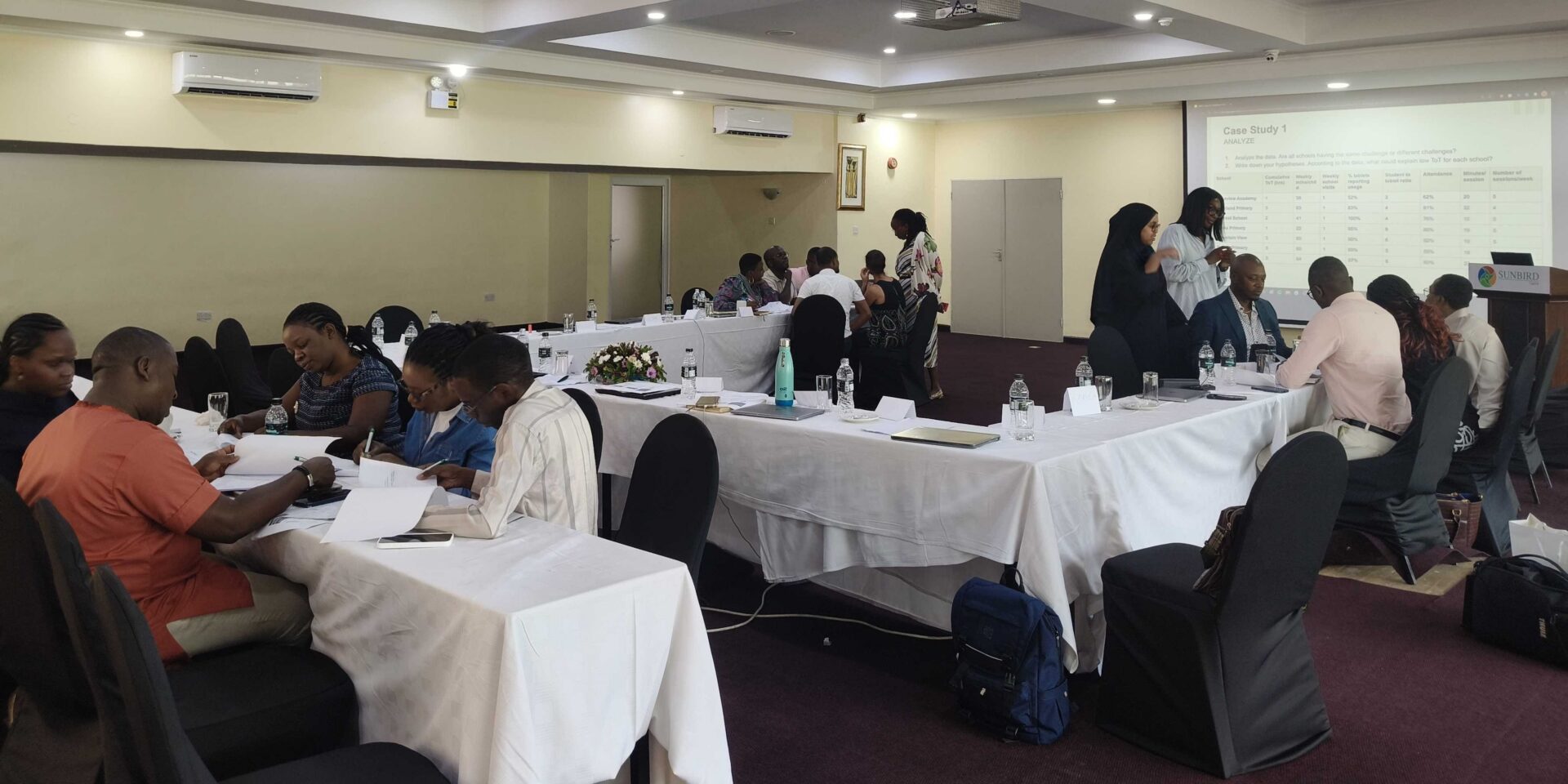
In Malawi earlier this year, Laterite led Imagine Worldwide (IW) program managers from Sierra Leone, Senegal, Tanzania, and Malawi through hands-on training as part of our ongoing technical assistance partnership. Over several days, our specialist researchers led the IW teams through practical exercises, collaborative problem-solving sessions, and discussions focused on strengthening how data is used to guide program and policy decisions. The sessions were designed to be interactive, practical, and tailored to the realities of day-to-day program management. Participants explored topics including deconstructing key performance indicators, interpreting dashboards to identify red flags, identifying trends, distinguishing between implementation and data quality issues, and formulating and evaluating remediation strategies.
This training in Malawi was only one piece of a broader effort to strengthen data-informed decision-making across IW’s operations. Our collaboration with Imagine Worldwide began with a rapid diagnostic designed to understand how data flowed through the organization. We reviewed existing systems (including dashboards, SOPs, and current onboarding processes), and we interviewed program managers, the data team, and directors to gain a deep understanding of their current capacity. The review highlighted several key opportunities, including having a shared language for good data-driven decision-making.
The findings from the diagnostic became the foundation for the second phase of the partnership: a tailored capacity-building programme for both program managers and executive leadership. We invested time upfront to understand IW’s objectives, workflows, data systems, team capacities, and operational challenges. By the time training began, we had evidence-led sessions prepared that spoke directly to participants’ day-to-day realities, and we ensured that learnings could be scaled across multiple country contexts.
Our approach to capacity building
Our overall approach focuses on building internal capacity and sustainable systems that enable teams to consistently interpret evidence, ask actionable questions, and make confident data-driven decisions. We follow a practical “Plan, Analyze, Act, Evaluate” framework, working with partners to strengthen systems for data use and decision-making through tailored planning, collaborative analysis, embedded technical support, and continuous evaluation to promote sustainable institutional capacity. This approach is grounded in our broader expertise across monitoring systems, evaluations, analytics, and operational research, which allows us to connect technical concepts directly to real-world management decisions.
But why does capacity building matter? Well, strong data systems only create impact when teams have the confidence and capability to use them effectively. For organizations operating at scale, the ability to interpret trends, identify issues early, and draw actionable insights from data can directly shape program quality and policy decisions. Reliable data-informed processes help teams move from reactive decision-making to proactive management. Our approach to capacity building therefore focuses on creating organizational cultures where evidence can be trusted and embedded into everyday decision-making.
Looking ahead
Our partnership with Imagine Worldwide reflects how technical assistance can evolve from identifying operational challenges to building long-term organizational capability. Laterite’s work so far has already contributed to the executive leadership and the program manager team in having a shared language around how to make ‘good’ data-driven decisions and reflect further on what they should be measuring as the program continues to scale. Looking ahead, we hope this support will help IW teams across all levels of the organization, in particular in translating insights into program and policy decisions.

This blog was written by Research Associates Ilse Peeters and Faiza Omar, and Tanzania Country Manager, Ravina Pattni.