
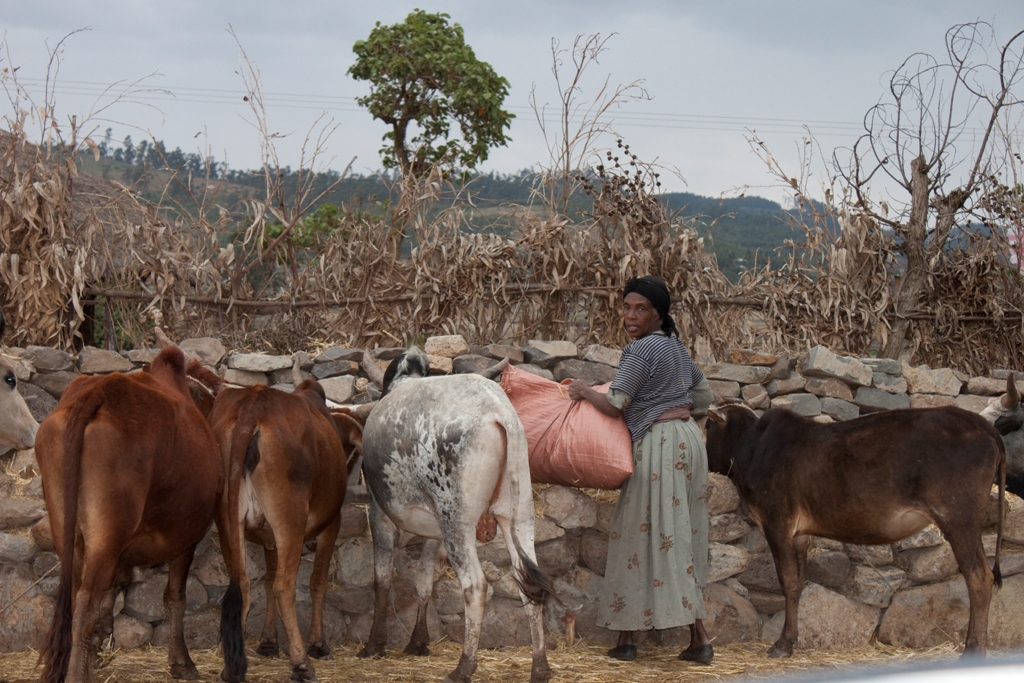
Access to finance can help farmers invest in their production and grow their businesses. But agricultural finance can also influence what happens inside households: who makes decisions, who controls income, and what families eat.
Research conducted through the IGNITE (Impacting Gender and Nutrition through Innovative Technical Exchange in Agriculture) program explores these questions in the context of Tanzania’s dairy sector. The study examines how financing from the Tanzania Agricultural Development Bank (TADB) affects dairy production, household decision-making, and dietary outcomes among farming families.
Laterite contributed to this work as a learning partner on the IGNITE program, supporting research and evidence generation on the links between agriculture, gender, and nutrition.
Why gender and nutrition matter in agricultural programs
Agricultural programs often aim to increase productivity and income. But these gains do not always translate into improved wellbeing for all members of a household.
Women play a central role in agricultural production across many African farming systems, yet they often have less access to resources such as credit, land, and training. These constraints can affect both farm productivity and household nutrition outcomes.
Understanding how agricultural interventions affect gender dynamics within households can help institutions design programs that benefit women and men more equitably, while also supporting better diets and nutrition.
The IGNITE program works with agricultural institutions—including financial institutions, NGOs, and private-sector actors—to strengthen their ability to integrate gender and nutrition considerations into agricultural programs.
Studying dairy finance in Tanzania
The mixed-methods research focuses on dairy farmers supported by the Tanzania Agricultural Development Bank (TADB) across four regions (Arusha, Kilimanjaro, Mbeya and Tanga). Access to finance can allow farmers to invest in improved cattle, feed, and other inputs that increase milk production.
The study explores how these investments interact with household dynamics by examining:
- Gender roles in dairy production
- Decision-making around income generated from dairy activities
- Control over financial resources within the household
- Labor allocation between men and women
- Household dietary diversity and milk consumption
The findings highlight several important patterns:
- First, households that accessed dairy financing tended to report higher milk production, reflecting investments in improved cattle and production inputs.
- Second, the research suggests that women remain heavily involved in dairy production, but men are often more likely to control the income generated from milk sales. This highlights the importance of understanding how financial interventions interact with existing gender norms within households.
- Third, the study found positive links between dairy production and milk consumption within households for both men and women, suggesting that increased production may contribute to improved dietary diversity and access to nutrient-rich foods.
Laterite’s role
Laterite supported the study through research design, data analysis, and reporting, working closely with partners involved in the IGNITE program.
As IGNITE’s learning partner, Laterite contributes to building an evidence base on how agricultural interventions interact with gender and nutrition. This includes designing studies, supporting monitoring and learning activities, and documenting lessons from partner institutions. Learn more about Laterite’s work on gender and nutrition research here.
Informing future agricultural programs
Evidence on how agricultural finance affects household dynamics can help financial institutions and development organizations design programs that deliver broader benefits.
Insights from this research contribute to a growing body of evidence on how agricultural interventions can support more inclusive economic outcomes and improved nutrition for rural households.
Read the full journal article:
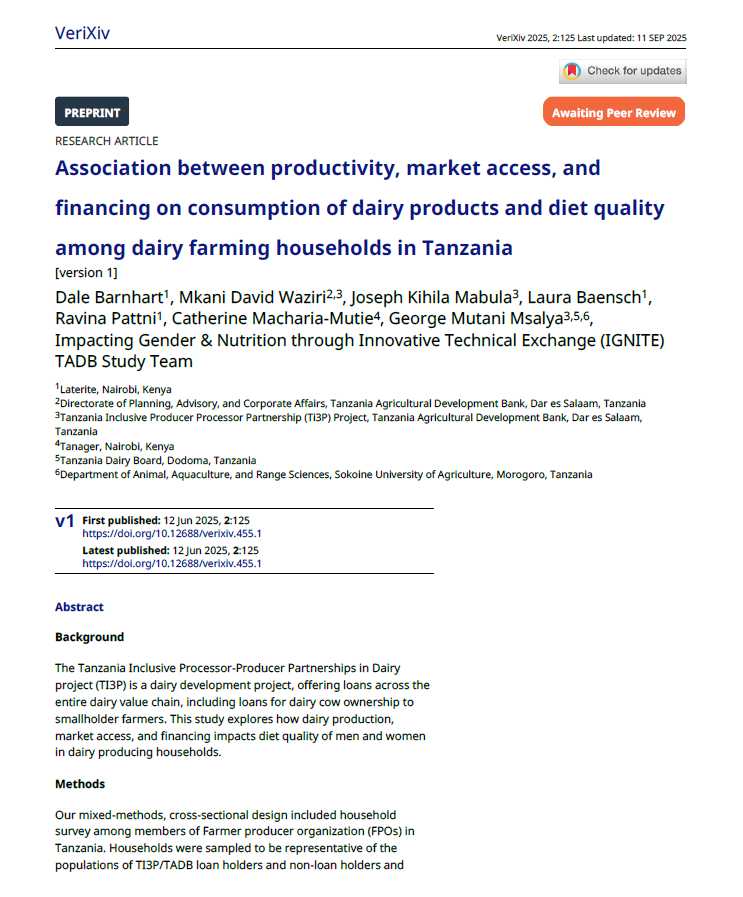
Full text PDF (<1MB)
This blog is written by Jessie Ramirez, Business Development & Communications Associate at Laterite.
Photo credit: Bioversity International, T. Wolday, Flickr